
SITREP #034
Poor Systems Beat Good People Every Time.
STATUS : Compensating
LOCATION : Operations
RISK : High
Good people can compensate for poor systems, but they shouldn't have to.
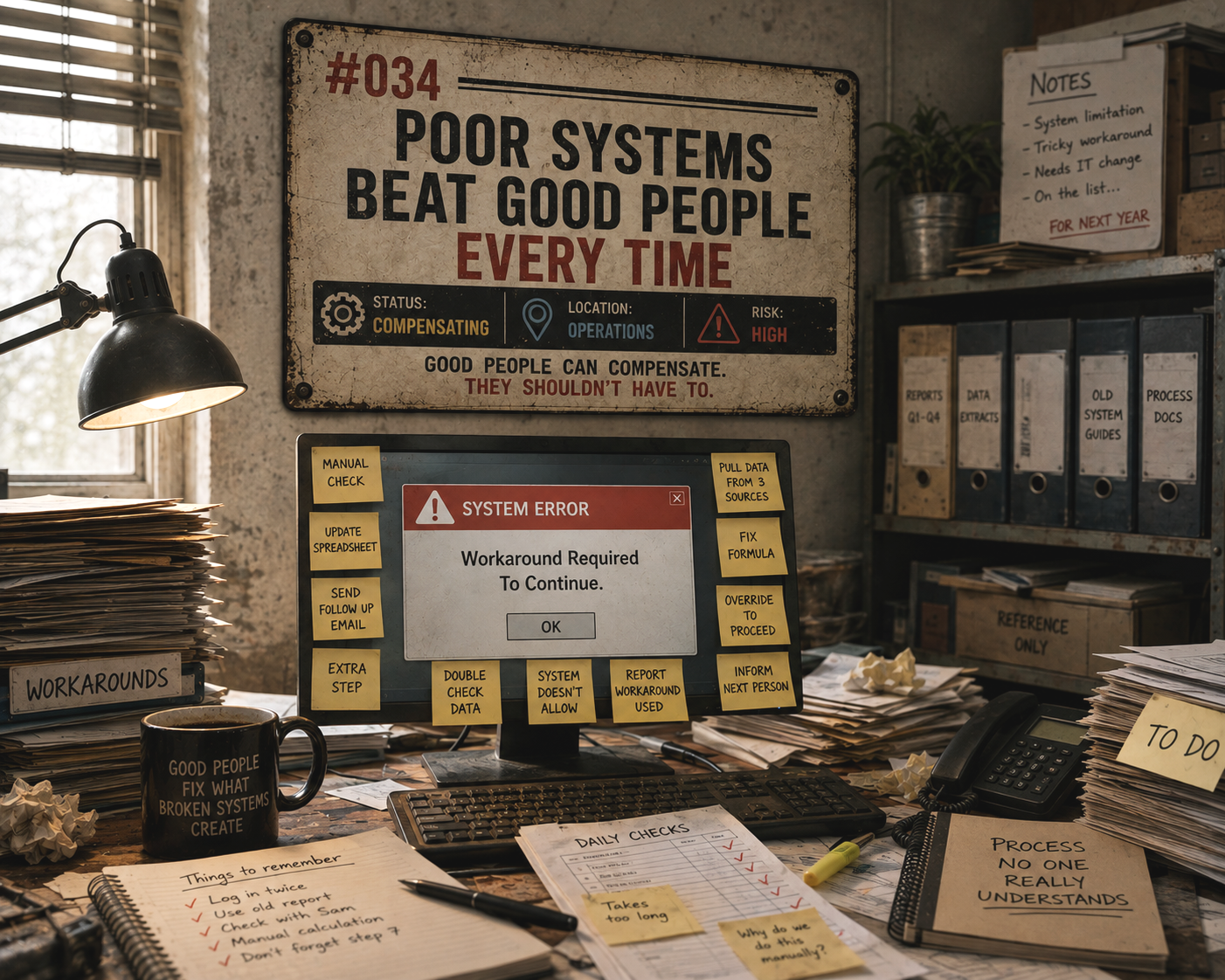
Poor systems rarely fail immediately because good people find ways to keep them working. They create spreadsheets, develop workarounds, double check information, manually transfer data between systems and remember the extra steps that aren't documented anywhere. Experience and dogged determination fill the gaps and, from the outside, the process continues to function.
The problem is that this can disguise how ineffective the underlying system has become. What looks like a functioning process may actually depend on individual knowledge, additional effort and people continually correcting what the system should have done in the first place.
Eventually something changes. Volumes increase, an experienced colleague leaves, the workaround fails or somebody simply misses one of the additional steps because they’ve been left juggling too many balls.
Good people can compensate for poor systems for a surprisingly long time. But when good performance depends on people continually overcoming the system, the system inevitably defeats their endeavour in the end.