
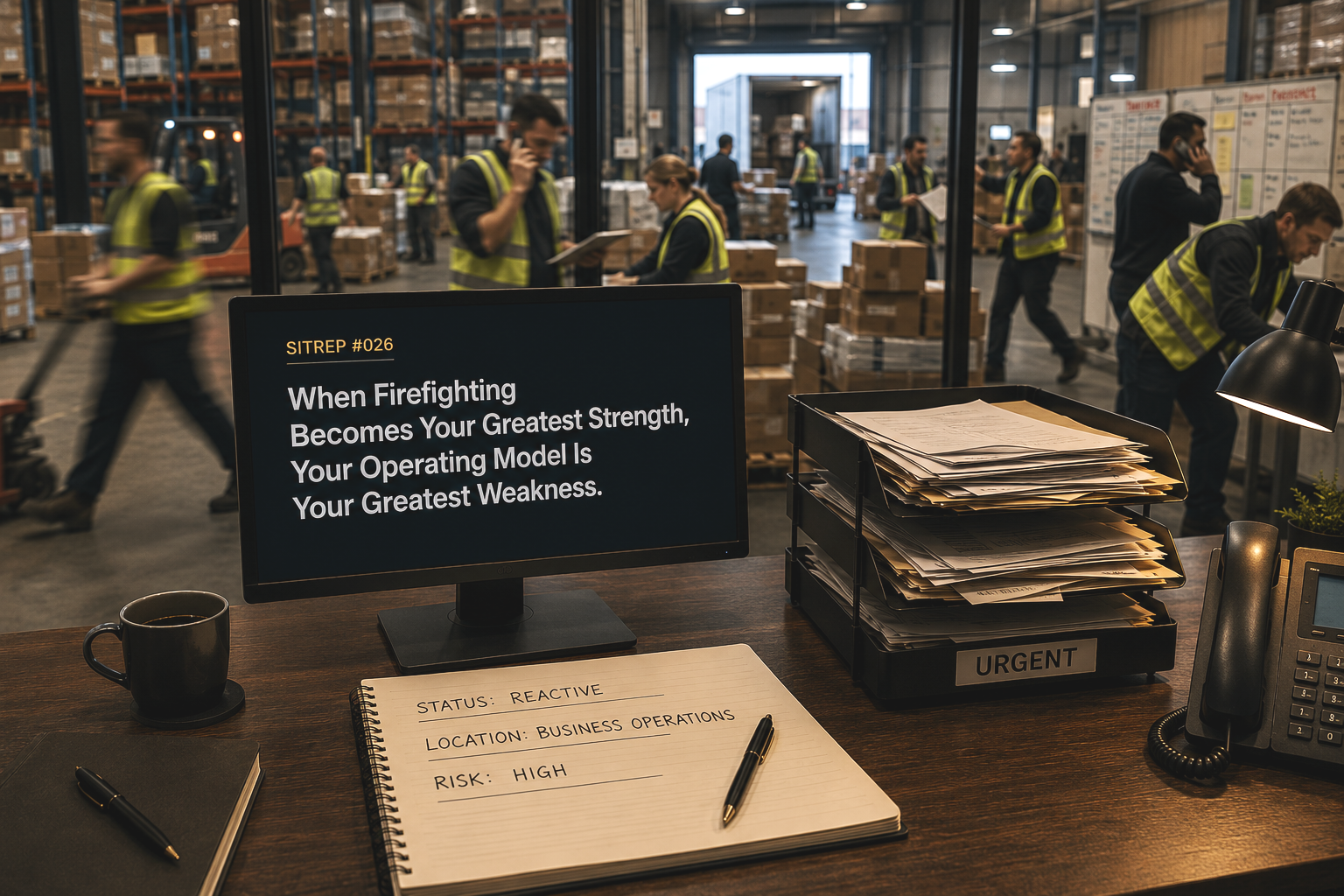
SITREP #026
When Firefighting Becomes Your Greatest Strength, Your Operating Model Is Your Greatest Weakness.
STATUS : Reactive
LOCATION : Operations
RISK : High
Heroics kept the operation running. They rarely improved it.
When an organisation celebrates the people who rescue every crisis, it often overlooks the system that keeps creating them.
Most organisations admire people who can firefight. They stay calm under pressure, solve problems quickly and somehow keep everything moving despite the chaos. They're often viewed as indispensable, and rightly so because this is a valuable capability. The problem is that when firefighting becomes an organisation's greatest strength, it's usually because the operating model has become its greatest weakness.
Poor planning, weak processes, unclear accountability, inadequate systems and reactive decision making create a constant stream of avoidable and self-inflicted problems. Over time, the organisation becomes remarkably good at responding to them. People work longer hours, priorities change daily and last minute interventions become habitual. The crises are resolved, but the root causes remain.
Ironically, the very people keeping the operation afloat can unintentionally reinforce the cycle. Every successful rescue reduces the urgency to fix the underlying problem. Heroics become normalised. Hence, prevention becomes deprioritised.
High performing organisations still respond well when things go wrong. The difference is that they spend far more time preventing problems than celebrating the people who solved them.
Firefighting is undeniably an essential capability. But should never become the operating model.