
SITREP #023
The Action Tracker Tracked Everything Except Action.
STATUS : Bureaucratic
LOCATION : Meetings
RISK : High
When everything is tracked, nothing is prioritised.
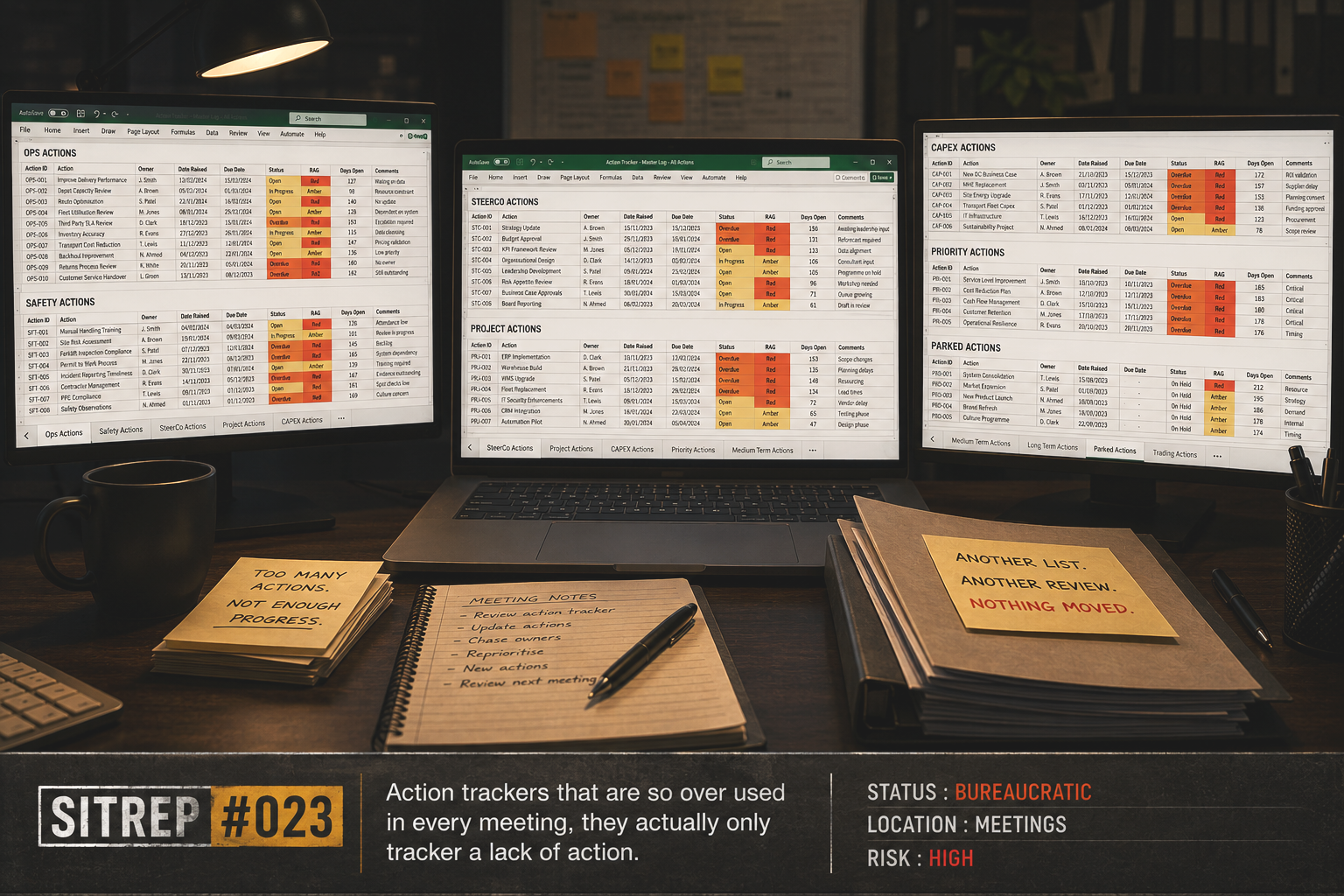
Action trackers exist for a reason. They create visibility, clarify ownership and help teams prioritise and monitor progress.
The challenge comes when they become the output rather than a tool. Every meeting generates another action list, another tracker and another review.
One of the clearest signs you've crossed the line is when a significant proportion of every meeting is spent reviewing actions that haven't moved since the last meeting. Deadlines are extended, ownership is reconfirmed and the actions simply roll forward once again. Visibility increased, but execution didn't.
When every function has multiple trackers, priorities become fragmented and attention diluted. Teams spend more time updating actions and justifying the lack of progress than completing them.
The purpose of an action tracker isn't to record everything. It's to ensure the important things get done.