
Judgement Is Forged, Not Manufactured.
Good judgement isn't something you're given. It's accumulated through experience, mistakes, consequence and reflection.
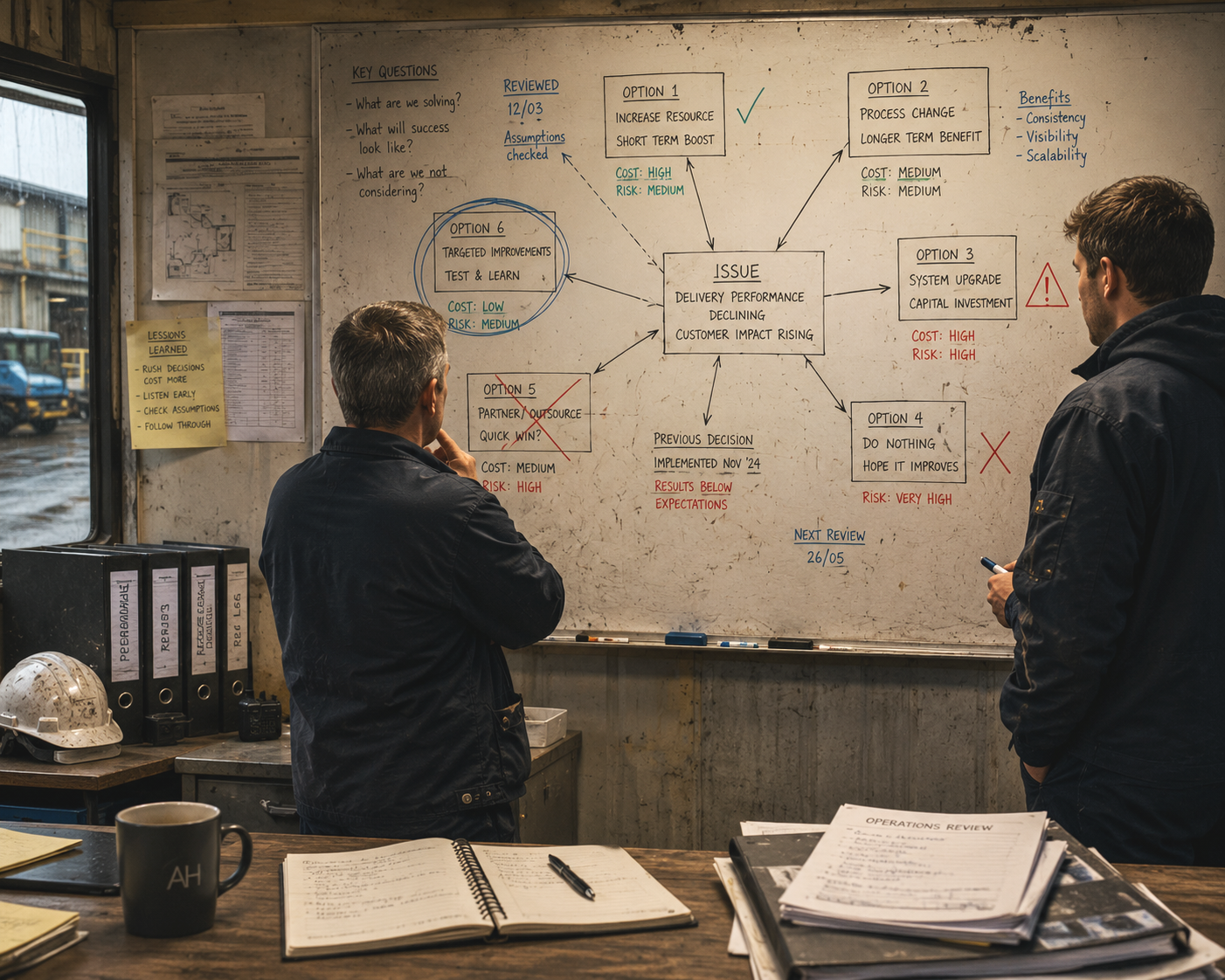
Organisations invest enormous amounts of time trying to improve decision making. Frameworks are introduced and processes are documented. Data becomes increasingly sophisticated. Dashboards provide more information than ever before, and AI can now analyse, challenge and recommend at extraordinary speed. All of these things can help people make better decisions, but none of them manufacture judgement.
Judgement is different. It's the ability to make sense of incomplete information, competing priorities and uncertain outcomes. To recognise which piece of information matters and which is simply noise. To know when the process should be followed and when the situation requires something different. To understand that the technically correct answer isn't always the right answer once people, customers, risk and bigger picture consequences are considered.
That capability can’t be developed in a classroom alone. It has to be forged through experience. The decisions you got wrong. The person you underestimated. The project that looked a winner until it suddenly wasn't. The customer complaint that initially appeared insignificant but exposed something much bigger. The investment that seemed expensive until you experienced the cost of not making it. The supposedly urgent problem that taught you the value of waiting. The seemingly small issue that taught you when not to.
Over time, those experiences accumulate. Patterns become more recognisable and weak signals become easier to spot. You begin to understand which questions need asking and where problems are likely to emerge. Sometimes you can't immediately explain why something doesn't feel right. You've simply seen enough similar situations to know that it's worth looking more closely.
That's judgement being forged, but experience alone isn't enough. Someone can have twenty years' experience and effectively repeat the same year twenty times. Experience only becomes valuable when it's accompanied by reflection, curiosity and a willingness to recognise when you got something wrong.
Good judgement requires scar tissue. Not because leaders need to fail spectacularly before they become capable, but because consequences create learning that theory can’t replicate. The gut wrenching feeling of making a genuinely bad call can't be faked, but it will shape future decisions if you take your medicine, reflect honestly and apply the learning.
This creates an interesting leadership challenge. Organisations understandably want to reduce mistakes. Governance, controls and processes exist for good reasons. But if every difficult decision is escalated upwards, every risk is removed and emerging leaders are protected from ever getting anything wrong, where exactly are they supposed to develop judgement?
You can't ask people to exercise judgement while denying them the opportunity to build it. This creates an inevitable tension. Developing judgement requires accepting a degree of controlled failure. The skill is creating enough space for people to get things wrong without allowing the consequences to become catastrophic.
Developing leaders therefore requires giving people progressively greater responsibility. Letting them make decisions while the consequences are still manageable. Asking what they think before giving them the answer. Allowing them to experience the outcome. Debriefing what worked, what didn't and what they would do differently next time.
It also requires experienced leaders to resist becoming the answer machine. Solving the problem yourself may be faster today. Helping somebody else develop the judgement to solve it themselves creates capability for tomorrow and beyond.
Technology makes this even more important. AI will increasingly give leaders access to extraordinary amounts of information, analysis and recommendations. It will undoubtedly improve decision making. But having better answers available doesn't automatically mean knowing which answer to trust, when to challenge it, what context it cannot see or what unintended consequences might follow.
The more powerful the tools become, the more valuable judgement will likely become alongside them, because eventually every framework reaches its boundary. Every dataset contains gaps and can support opposing interpretations. Every process encounters an exception. Every leader eventually faces a decision where there is no obvious right answer.
That's when judgement matters most. It wasn't manufactured in that moment, it was forged in all the moments that came before it.